
How to Talk to Your Teen About Money | Faith-based Guide for Parents
Many parents want to talk to their teens about money — but don’t know where to start. This faith‑based newsletter helps Christian parents have healthy, practical money conversations without guilt, lectures, or pressure.
Written by a father and grandfather who has helped his own kids learn financial responsibility, this guide gives you real experience, simple conversation prompts, and faith‑aligned guidance to raise financially responsible young adults. If you’re ready to start the conversation with confidence, begin with our faith‑based Parent Guide to teen money conversations.
Whether your teen is in high school or college, learning to manage money is more than budgets or bank accounts — it’s about character, stewardship, and wise decision-making. In this newsletter, I share real-life experiences as a father and grandfather, showing how everyday moments can become opportunities to teach teens about earning, saving, giving, and spending responsibly.
By subscribing, you’ll gain:
Practical tips to open money conversations with teens
Stories from real families that illustrate principles in action
Faith-forward strategies that teach stewardship and responsibility
It’s time to equip your teen for financial independence — and build confidence in yourself as a parent along the way.
Nearly 1 in 3 young adults (32.5%) ages 18–34 are living at home again, according to the latest 2024 American Community Survey from the United States Census Bureau. The move-out trend has stalled. Independence is being delayed.
The question isn’t why they’re home.
The real question is: Are they prepared to leave well when the time comes?
Why This Newsletter?
Written by a parent navigating real money conversations
Parenting teens about money: Faith-forward, not fear-based
Focused on conversation, not control
Built for parents who want to raise financially responsible young adults


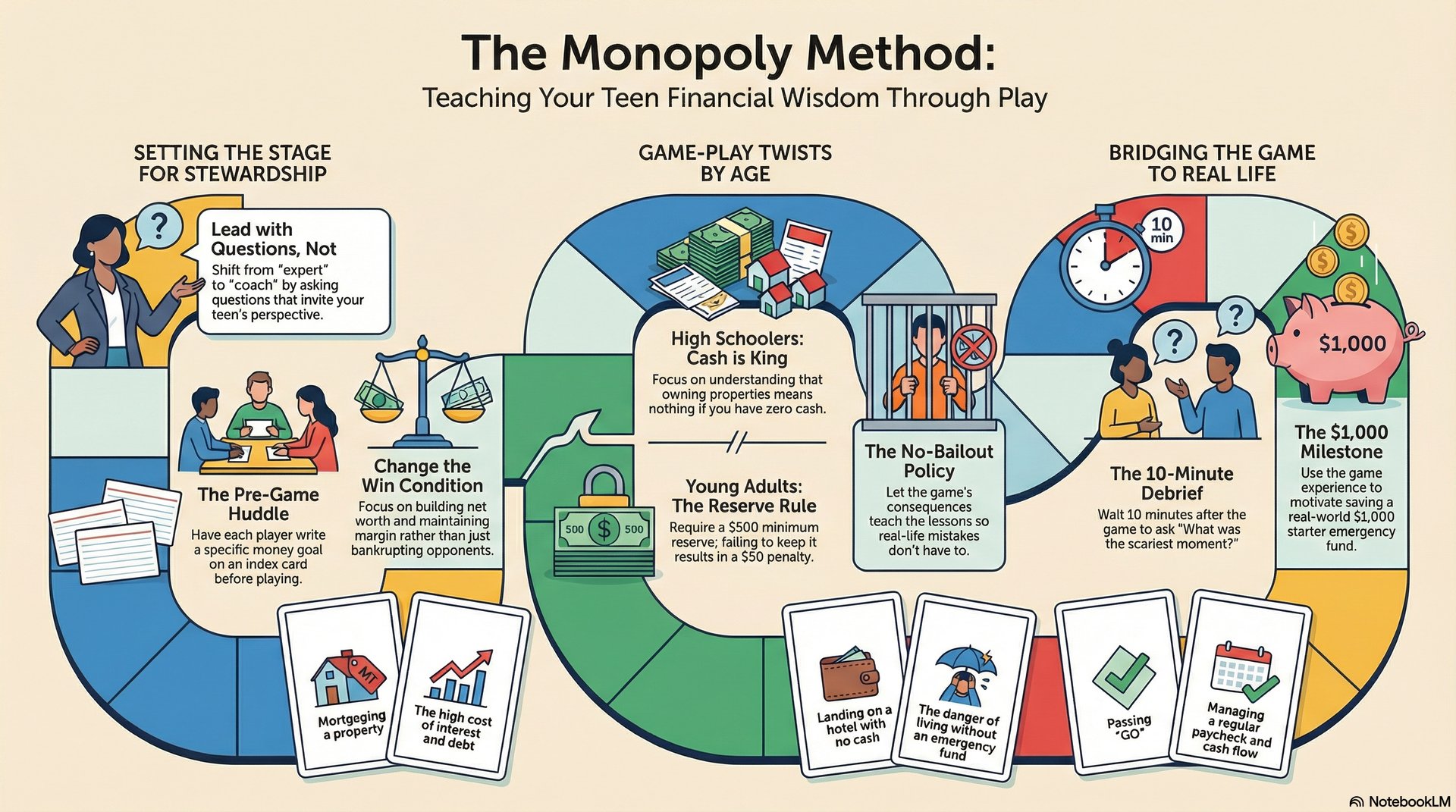
The Monopoly Method
A 5-part framework that uses everyday moments (and yes, even games) to teach money principles without pressure.
Here’s What You’ll Get:
Practical stories
Conversation prompts
Faith-aligned money lessons
No spam. No guilt. Just guidance.



Frequently Asked Questions
How do I start talking to my teen about money?
Start with conversation, not correction. Instead of lecturing, ask simple questions about their spending, saving goals, or what they believe about money. If you’re unsure where to begin, start with the Start Here Guide, where I walk you through the first simple money conversation you can have this week.
How does your product/service work?
You’ll get short, actionable emails with:
Conversation starters you can use immediately
Real-life money scenarios teens face
Faith-based perspective on wealth and stewardship
Practical tools that build long-term financial confidence
Simple. Clear. No overwhelm.
I don’t feel confident talking about money. Can I still do this?
Yes. You don’t need to be a financial expert. You just need a starting point. Each issue gives you simple conversation prompts and practical scripts so you can talk without lecturing, shaming, or freezing up.
Is this newsletter faith-based?
Yes. Money Talks Made Easy approaches teen financial literacy from a Christian, biblical perspective. I write as a father and grandfather who believes money is part of discipleship. If you want practical, faith-aligned guidance without guilt or pressure, start by subscribing and reading the Start Here series.
Why is financial literacy important for young adults?
Because money habits form before adulthood — and most schools don’t teach real-world personal finance. Without guidance, teens learn from social media, peers, or debt culture. Inside the newsletter, I share practical frameworks — including lessons from the Monopoly Method — to help you build financial wisdom step by step.
Is this really free? What’s the catch?
It’s free. No catch. If it’s helpful, you stay. If not, you unsubscribe in one click. But most parents stay because they finally feel equipped to lead their family’s money conversations with peace instead of pressure.